Blog / Client Presentation
Crafting the Perfect Pitch: Presenting Your Candidate's CV to Clients Effectively
Placing a candidate is as much about the pitch as the person. What it takes to present a CV in a way that actually lands with clients.
Davzon Editorial · January 15, 2024 · 4 min read
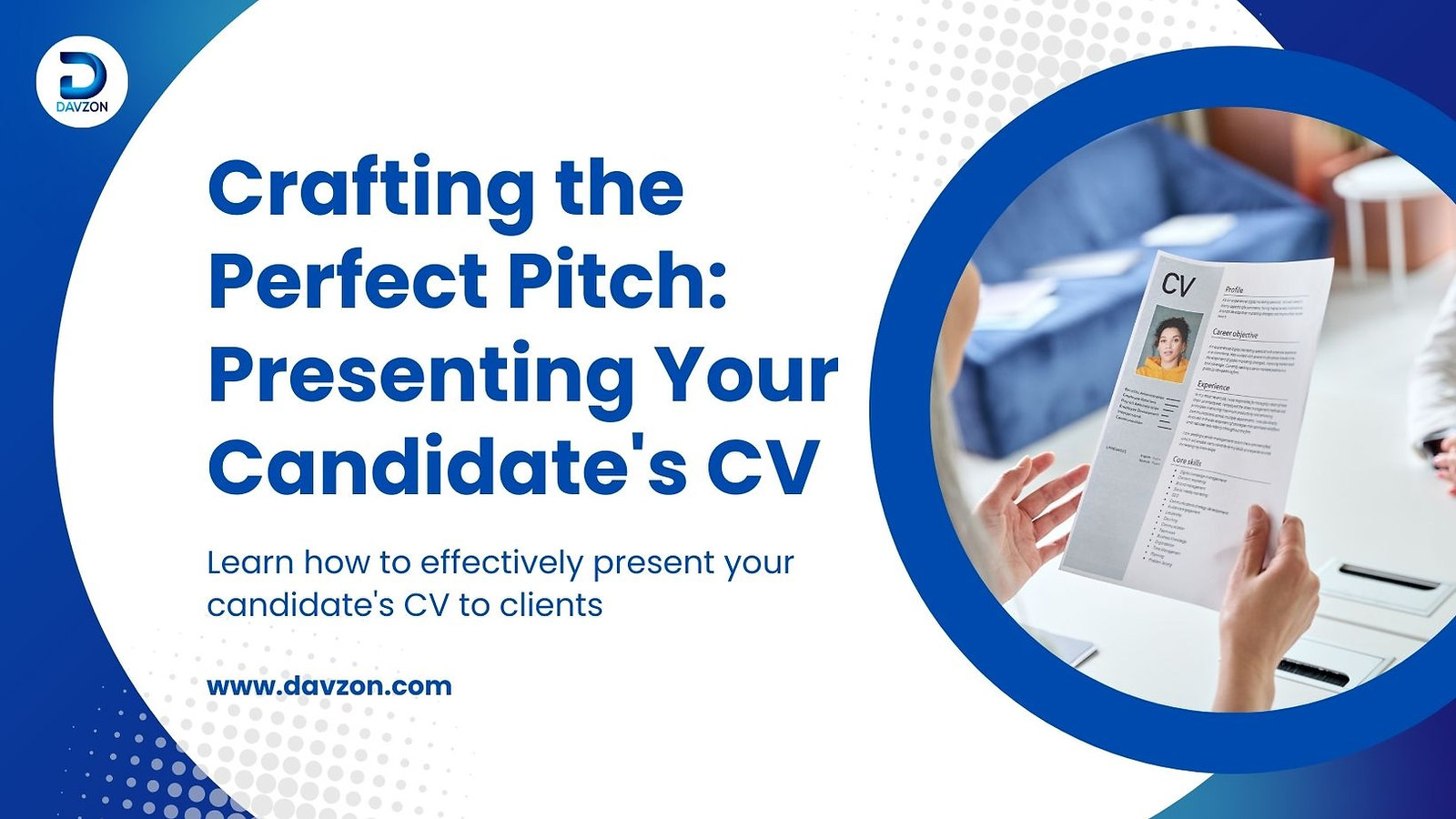
In competitive recruitment, presenting a candidate's CV to a client is its own craft — one that takes finesse, strategy, and a genuine understanding of both the client's needs and the candidate's strengths. How well a recruiter conveys a candidate's qualifications and potential value can shape the outcome of a placement as much as the candidate's actual fit. Here's what makes a presentation land.
Understand the Client's Needs First
Before presenting any CV, a thorough client briefing — culture, values, team dynamics, and the specifics of the role — should shape the whole presentation strategy, not just the CV's content.
Get specific about the skills, qualifications, and attributes the client is actually looking for. That clarity is what lets a recruiter highlight the right things prominently, making the match between candidate and client obvious rather than implied.
Optimize the Candidate's CV
Open with a compelling candidate summary — a concise section capturing unique selling points, core competencies, and career trajectory, with a clear line drawn to what the client needs.
Customize the CV against the specific job description in hand. Relevant experience, skills, and achievements that speak directly to the client's stated requirements show a level of care that generic submissions don't.
Quantify achievements wherever possible. Numbers give a CV substance — concrete evidence of impact resonates with clients far more than a general claim of effectiveness.
Example
"Increased sales revenue by 25% in the first quarter after implementing a new marketing strategy."
Presenting candidates well goes beyond transactional interactions — it builds the trust that long-term client partnerships are made of.
Prioritize the experience most relevant to this specific role — projects, responsibilities, and accomplishments that map directly onto the client's industry and requirements.
Clients increasingly value candidates who show a real commitment to learning. Relevant certifications, training, and professional development are worth surfacing, not burying in a footnote.
Don't Skip the Soft Skills
Alongside technical qualifications, a candidate's soft skills — communication, leadership, adaptability, teamwork — genuinely shape their overall fit for a role, and deserve real space in the presentation.
Concrete instances where collaboration led to a successful outcome reinforce that a candidate will contribute positively to a client's working environment, not just their org chart.
Presenting the CV to the Client
The cover email matters as much as the CV. Keep it concise, and let it introduce the candidate, summarize key qualifications, and explain the fit — not repeat the CV verbatim.
Identify the specific pain points a client is facing in their hiring process, and position the candidate as a direct answer to them.
If a candidate has made career transitions, give that context. Framed well, a transition reads as versatility, not inconsistency — but only if the recruiter connects the dots for the client.
Keep the channel between client and candidate open. Encouraging questions and discussion gives the client real insight into the candidate's background, beyond what any document can convey.
One agency presenting a candidate for a senior project management role at a technology firm tailored the CV to emphasize project leadership and successful delivery of complex projects, and addressed the client's specific need for agile experience directly in the cover email. The client, impressed by how targeted the submission was, scheduled an interview immediately — and the candidate secured the role.
Conclusion
Representing a candidate's CV to a client well takes strategic thinking, real attention to detail, and a genuine grasp of both sides of the match. Thorough client briefings, a well-optimized CV, relevant experience foregrounded, soft skills given their due, and a persuasive cover email — together, these are what turn a submission into a placement.
In competitive recruitment, the ability to present candidates in a way that resonates with clients is a genuine differentiator. It goes beyond transactional interactions — it builds the trust that long-term client partnerships are made of, and that trust compounds well beyond any single placement.